Savings for your health, wealth and environment
From my dorm room supply of cereal boxes and microwavable soups, I never thought I’d end up eating a home cooked meal just about every day, and that those meals would be prepared by me. My grandmother taught me a thing or two about baking but chicken adobo and lumpia were, and still are, beyond my skill. A Filipino meal could take hours of chopping, mixing and simmering, which is why, for big events, it was all hands on deck for my grandmother, mom, aunts, and myself, relegated to peeling shrimp and snacking on whatever came out of the oven first.
Youtube changed my perception of cooking from this big daunting chore to a simple pleasure. I became addicted to Food Wishes and Chef John’s explanation of techniques. Now I know why things are cooked the way they are which helps me better grasp how to cook them and how to improvise.
Then something even more unbelievable happened. I became a semi-vegetarian. My fiancé decided to cut out meat one day and no way was I going to get a pack of steaks just to eat all by myself. So now I find myself each week making a B-line for the produce section, occasionally wandering by the fish, then making a pit stop in the dairy aisle before flipping off the TV dinners on my way to the register.
In all I feel like I’m actually eating right for once in my life and I’m not spending a ton on food. I’ve learned a lot in the transition from non-cook to lazy-cook to not-as-lazy cook and I thought I’d share some of knowledge.
Tip 1: It’s cheaper to do it yourself
Pre-shredded cabbage or a bag of prewashed cauliflower florets are pretty damn awesome. And those pre-chopped onions are a godsend. But if you really want to save some money for not a lot of time, just bye whole ingredients and process them yourself. Making cauliflower rice out of a whole head of the white stuff is not that hard and you’ll get way more for sometimes half the price. And let’s not forget the original “set it and forget it,” soaking your own beans overnight. These whole ingredients usually salt and additive free so you have full control of the taste and healthfulness of your meal. Now sometimes you do just need those extra minutes in the kitchen. I understand, I’m still that lazy chef on the inside. It just helps to keep in mind that convenience costs.
Tip 2: Think long term for the basics
I started getting powdered stock or broth because it ended up being cheaper than those 32 oz cartons and I could measure out exactly how much I need for a recipe and the rest will keep for a very long time. My fascination with wartime rationing lead me to getting powdered eggs as well. Sometimes I am struck with the need to bake something and I never have any eggs in the house. With powdered eggs, I have a ready supply. Also, if you only need a small amount of peas or corn that week, then get frozen packs and save the rest for another recipe.
Bonus tip: Whole milk has a slightly longer shelf life than milk with less fat, but you can also get a dairy alternative like soy or almond if you can’t finish a whole gallon in two weeks.
Extra bonus tip: Dried herbs and spices are the best, but if you really need some fresh herb (yes there is a difference) you may want to consider buying a potted plant rather than just a small pack of overpriced leaves. A small windowsill herb garden is the gift that keeps on giving.
Tip 3: Waste not, want not
If all you have left at the end of the week is a few random ingredients, just make a meal out of them rather than going out and getting more. There are literally millions of recipes out there online; you will hit ingredient bingo with something. I once made a hearty carrot casserole with some leftover root vegetables, flour, butter, and milk.
Tip 4: GMOs 4 life!
Say all you want about the health benefits of organic produce; they come with a price markup and they sure don’t last very long. If you’re really worried about pesticide and chemicals just keep in mind that not all fruits and veggies are the same. Produce like bananas and melons have too thick of a rind to cause concern about lingering pesticides. And organic pesticides aren’t all guaranteed to be good for you either. Also, keep in mind that organic crops have a lower yield which means that they require more land in order for the farmer (or huge conglomerate) to make a profit. This may translate to increased habitat depletion. So if you care about the health of your friendly neighborhood owl or jackrabbit then bring on the GMOs.
Tip 5: Beware the health claims and fads
The health and weight loss industry is a giant money maker that will take advantage of you if you take their word on anything. So if the packaging mentions anything like, “low-fat, vitamins, antioxidants, extra protein…” then approach with suspicion. Always check the nutritional facts, especially for the amount of sugar they had to load the product up with in order to make that non-fat product palatable.
It’s better to be cautious of health fads as well. For one thing, anything popular is likely to go up in price. The new hot food item also probably didn’t get there because it has gone through rigorous scientific study. And lastly, fads force the food industry to heavily invest in one type of crop when producing a variety is much better for your health and the health of the soil.
The Gaming Elite
I consider myself a gamer, though perhaps some out there would not. I have colleagues that pre-order, pick up the game upon release and have it mostly beaten by the weekend. I digest things a bit slower. I don’t usually get to a game until it’s been out for about a year–though being so far behind the gaming community, there’s always a steady stream of old content to wade through–then I grab a pre-owned copy and play it at my leisure. If I’m not enjoying a game then I stop playing it. If it’s a good game I probably play it over again and study it and obsess over it’s details, narrative, and production process.
As you can imagine, this methodology does hold me back somewhat in videogame conversations, specifically when talking to friends who write about the latest games for a living, but when we do talk about older games, I certainly know my shit.
Now where does this put me on the harcore gamer scale? I’m not sure, nor do I really care. In my self identification, I think I’m a “real” gamer and even aspire to be a videogame scholar (I know, Nerd Level: Expert). But people define this identifier in many ways. There are many who will judge you for your lack of FPS skills. Other’s won’t call you a “harcore” gamer if you don’t play RPGs. Then there’s the much belittled “casual gamer” label, which a significant bit of “serious” gamers reject all together.
The community has gone from this outcast group of close-knit kids, excitedly “in the know,” to a global society with a full blown system of hierarchy. The sense of elitism is strong among some. Perhaps it’s a reaction to the explosion of videogame popularity and accessibility, an attempt to maintain an underground feeling. Maybe people just want to feel special. Whatever the motives, such sentiments maintain this us vs them mentality which claims that there is a distinction between “real” games and inconsequential titles, and therefore that there are “real” gamers and the rest are just n00bs and posers.
This view stunts the potential of videogames. Moving beyond obscurity and being relegated to hobbyists, videogames have become a well established form of entertainment and the latest, new art platform since the invention of film around the start of the 20th century. And they have already followed a pattern similar to the first introduction of film, starting as a novelty and becoming commercially successful then a societal staple before being recognized as culturally enduring artifacts. New art mediums gradually become so prevalent throughout our culture that they stop being just for the elite and are produced for the masses in great variety and diversity. Just as there are good films, bad films, fluff films, and art films, there is a videogame for every audience.
It is strange that just when games are gaining legitimacy apart from being mere toys, gamers reject the world’s acceptance. The debate over whether casual gamers should be considered gamers seems a bit irrelevant today. It is no longer a matter of being a gamer or not being a gamer. We are now defined by the type of videogame player you are and which niche of gaming culture you follow. For how can one definition be used to describe such a diverse community?
Writing Duality
One of the reasons I’m so drawn to James Joyce is that he is the perfect embodiment of a writer’s ego. He held himself in high regard and yet continually believed he was a failure. He explores this conflict throughout his writing career, dotted with characters with lofty hopes and crushing dreams. Gabriel, in “The Dead,” is consumed by the feeling of coming up short, agonizing over how he is perceived by the party guests–whom he mentions are less educated than himself. And in the end he feels alien even beside his own wife, after she tears up over a former love.
This is the best way I can sum up the mental activity involved in the writing process, to view ones writing as genius one minute and then utter garbage the next. I have often mused over a scenario where a serious and intensely dedicated stint at writing would make me mad, and even my mild projects feel close to inducing a nervous breakdown. Trying to finish a first draft feels like walking across a field of broken glass. You might as well run across or your stuck bleeding to death in the middle.
I read this same torture in some of John Keats’s works which are filled with the burning passion popularized during the romantic period. Keats goes on and on about literary subjects that are so beautiful that he may die. And dying is supposed to be a good thing. He writes in a letter to his beloved Fanny, “I have two luxuries to brood over in my walks, your Loveliness and the hour of my death. O that I could have possession of them both in the same minute.”
The romantics were obsessed with the concept of the Sublime. They fawned over it so much that today it is mainly used as a positive term, but it once meant something a bit more sinister. If a thing was sublime, it was a terrible thing, but something so terrible that it was beautiful. It was a thing that moved the viewer to great emotional heights. Yes it all sounds a bit emo. The sublime darkness of a storm, swirling in a violent wind of torment, swallowing up the earth.
The current version of this is what I’ve heard called the beautiful ugly moment. Contemporary writers insert these instances of sublime to play with expectations, making a bleak scene more compelling by finding beauty within it. It amazes me how many times Cormac McCarthy can describe the grey wasteland of “The Road” and have it convey something different every time, and have some of those times be quite aesthetically striking. McCarthy likens the world to a charcoal sketch, swirls of grey, sheets of grey. The dead, ashen landscape seem to be very much alive for the downtrodden narrator.
Postmodern writers have a tendency to both subscribe to and throw away conventions. Good things happen at funerals and Christmas is filled with trauma. They comment on old standards by turning them on their head and they make these contradictions live in the same moment. Something as simple as imagery turns into a conceptual conflict.
There are two sides to every story, so the phrase goes. A writer’s mind is filled with contrary thoughts that seem to find a chaotic harmony on the page. If one thinks about something as long as an author does then one starts to see all the angles–and you start to second guess everything. This behavior breeds conflict, the perfect method for plot production with a byproduct of egotistical turmoil.
National Anthems in Film
In my long tradition of being consumed by obscure subjects, my fascination has recently zeroed in on national anthems. Listening to the songs themselves is quite pleasurable, especially given my fondness for choruses, but they grow much more powerful when a crowd of patriots are there to sing along.
My obsession may have been sparked by the film “Invictus.” The post-apartheid South African Rugby team had spent most of the film merely mouthing the words to their new national anthem until the world cup when the captain, played by an accent donning Matt Damon, passes out the lyrics for the team to memorize. They embrace a new national identity at the end of the film and sing their hearts out in a swelling of pride and Hollywood romanticism. The contemporary version of South Africa’s anthem is a very beautiful song, made up of multiple languages, the lyrics gathered from several different songs. And to see actual footage of it performed in front of real citizens, reveals pride indeed.
Similarly, the Star Spangled Banner is depicted as bringing people together in multiple films, but these scenes are meant to hold your attention amid the chaos of the plot. Immensely proud of their anthem, and the high degree of difficulty needed to sing it, American’s stop everything they are doing to listen, sing along, and hold their hands to their hearts in a pause preceding or proceeding the crazy happenings about them. Sometimes this is for comedic effect, as in “Christmas Vacation’s” rocketing Santa scene, or the purpose is to instill a calm before the storm as portrayed in “Dark Knight Rises” just before a football field collapses.
This ominous use is most often how the Russian national anthem shows up in American films. Still recovering from Cold War era films where the Soviet Union was a very common enemy, movies still use the “cut to Russia” transitions that are heralded by the Soviet era and later anthem. It is strange that the proud theme of one country could invoke a sense of danger and auster alienness for those in another. In “Rocky IV,” the two fighters size each other up, in “The Hunt for Red October” the singing introduces the beginning of a delicate cat and mouse game, and in many a spy movie, the chorus warns the undercover hero to be cautious in enemy territory. Each anthem has been a very powerful symbol for a country not to be taken lightly.
But perhaps the most powerful and memorable use of a national anthem I have seen, was in “Casa Blanca.” While Lazlo tries to make a deal with Rick for the papers of transit, they overhear German singing. As the Nazi officers crowd around a piano the entire bar of refugees and French countrymen stare at these would-be conquerors who, by this point in time, have attempted to stomp out and displace entire cultures. Lazlo walks over and tells the band to play “La Marseillaise.” With a nod from Rick, the band plays and all gradually join in until the officers are drowned out. They strain to keep singing under the weight of emotion, with tears in their eyes. That is the power of a song, the strength of a people’s identity. And the anthem becomes a rallying cry calling on people to defend their very way of life.
Book to Movie Adaptations and The Giver Trailer
I’ve been waiting for this movie to get off the ground for years. I remember when it was first announced, in my IMDB forum lurking days, it was slated for a 2011 release, and I still remember thinking how long a wait that would be. When the project was shelved, I knew it was in trouble. It’s just such a difficult novel to adapt, not your average young adult formula of good triumphing over evil.
I wrote a short treatment of the novel for a literature film class. I envisioned a more conceptual approach. The actual plot was simple, it was the world that I thought should be as vivid as possible, with gradual changes in visuals as the film progressed (starting in black and white and gradually adding one color at a time), mimicking the character’s changes from within. My initial approach was basically to make some Darren Aronofsky-esque boring art film that was more slow and emotional than plot driven. Not exactly a film targeted to the young adult audience. Not to insult YA audiences. Let’s just say that my overblown, self indulgent vision would probably need some toning down even for a general demographic. I just wanted to translate the experience I had from reading the book into film, but the two mediums elicit emotion in very different ways.
The book, one of my favorite books, manages to hold it’s audience because it is very character driven, we are in Jonas’s head and Jonas’s voice sounds very genuine to his age. But in a movie, you have a wider world to explore and less time to do it in. The scenes added to The Hunger Games movie, that weren’t in the book, illustrate the political climate and world a lot better than narrative exposition between the actors would have. The book is from Katnis’s perspective, but in the movie you get to step outside of her and get a more concise understanding of the situation than if we relied on the character’s gradual realization alone. So after watching the trailer for The Giver, when I saw that they seemed to add more character interactions and more dialogue (much of the novel’s ideas are conveyed through Jonas’s inner thoughts) I was worried, but hopeful. They seem to have made a few minor characters more prominent and are making the governing body, in the form of Meryl Streep, more of an obvious antagonist (also, Hollywood can never resist slipping in a dramatic kiss). I understand they have to make things more explicit in the movie or things will be left more confusing than artfully ambiguous. But too much spelling out and you might end up with another David Lynch style Dune, inner thoughts conveyed in voice overs (however much I love Dune, it probably wouldn’t work today).
The dangers with book adaptations is that you have to be explicit to convey an idea, but not so heavy handed that your just stating all the themes. So if the movie version has to inject some things into the plot to make a good movie, then I won’t resist (too much). Faithful adaptation don’t necessarily make good movies, that’s just the case for some books. A book could read like a movie and a movie could sound like a book (looking at you Chris Nolan), but the trick is finding the right approach to convey the ideas and spirit of the source material.
The Giver was more than a coming of age story to me. I saw it as a fight to claim your own identity and artistic freedom. I read it at a time when I didn’t really know what type of person I wanted to be, which I didn’t figure out until years later, but at that time, The Giver gave me the will to start that journey. It was also my introduction to dystopian stories and broadened my mind to a new way of thinking about the world around me, allowing me to examine the mechanics of society and a person’s place in it. However the filmmakers choose to interpret the novel for this adaptation, I hope it brings that sort of growth and introspection to many more people.
A Trip Through the Desert: the Transformative Nature of Nature
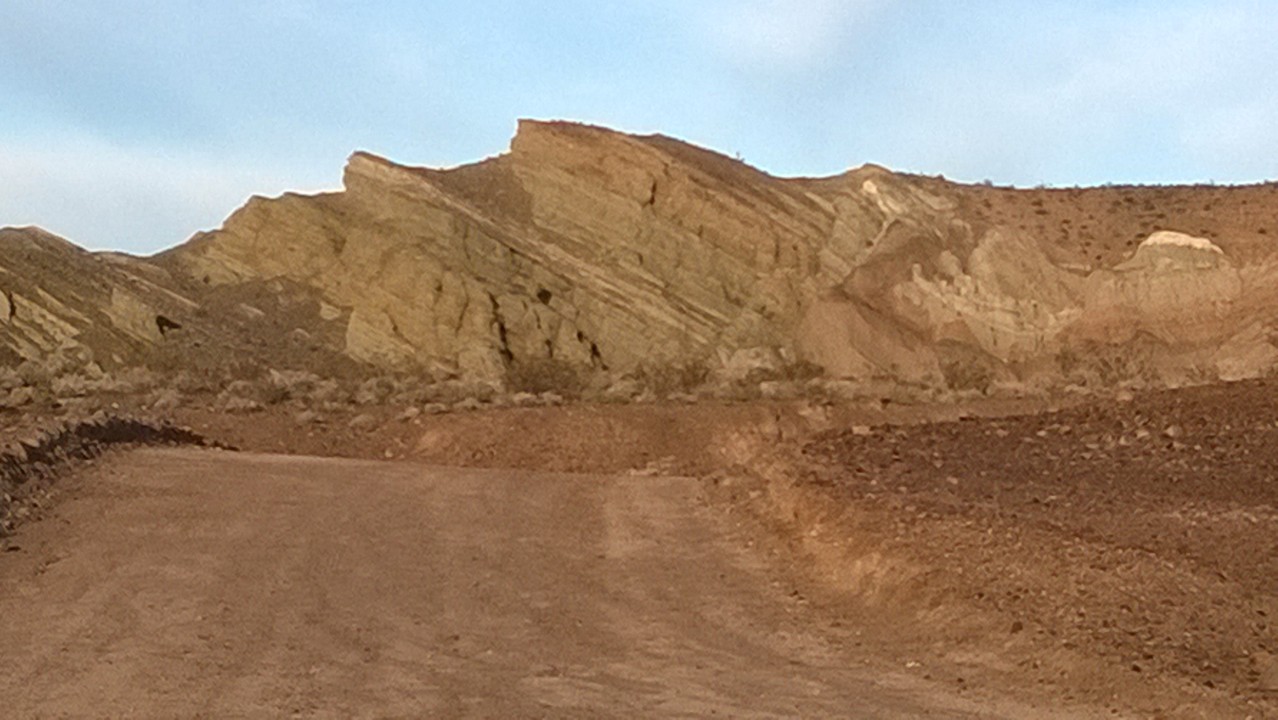 I really should start cutting back on these crazy titles, but I thought it would at least be appropriate for my little foray into Romanticism.
My friend, Kim, and I were taking a trip across California and through the desert to attend a high school friend’s wedding. Kim told me that if we found any place interesting along the way, we could stop and check it out. But we were taking a merchant route so for miles there were only rest stops and Dennys’ and the outlines of orchards, which the headlights passed over in the dark. We had prearranged to stop at a Denny’s part way through the trip, but had no idea how much of a beacon of civilization it would become to us. MacDonalds may dot the nation, but the prevalence of that bright yellow hexagon in the great expanse from NorCal to SoCal was astounding.
I’m getting to the Romantic part I swear.
The next day, after a rest in the reasonably priced motel room Kim and I had split (which came with a free continental breakfast I might add), we worked on our respective wedding toasts which the bride had asked us to give. Kim sat by the window of our dim room and I was on the bed. We had arranged the curtain so that it still let light in through the sides, but shut out any site of any fellow guest walking by. I had my notebook laid on my lap in a vein of light doing some of my best post procrastination writing. Kim found this awesome quote by the author of “The Little Prince,” “Love does not consist in gazing at each other, but in looking outward together in the same direction” and I was writing about the first time I met our friend in the 6th grade. The three of us went to both middle school and high school together. I thought about who we used to be, how much shorter we all were, and the people we transformed into.
After the wedding, Kim I were driving back to the motel, through a particularly desolate stretch of desert, when she peaked up through the windshield and realized how many stars were out. We just had to pull over and stare at the expanse. I had never seen so many stars in my life. We tried pointing out constellations we knew and even spotted a planet or two. Then as we twirled about on the side of the road with our heads craned back as far as they would go, we happen to whirl toward the same direction, just in time to see a faint light streak across the sky. I thought of the romantic thing scientists always say, that when you see starlight, your looking into the past. In the dark, I felt detached from everything. The sensation reduced me to a floating pair of eyes, without fatigue or fear or worry. We awed and wowed until the cold finally nagged me back into my body and into the car.

Before we had said our goodbyes and saw our friend off to her honeymoon, she had recommended we go visit this natural preserve just outside of town. It was called Rainbow Basin, and it peeked my interested when it was mentioned that the original Star Trek series shot some scenes there because the land looked so alien. And the area, apparently looked its best at sunrise. I set my alarm to give us just enough time to grab some clothes and coffee and when the hour came, Kim and I once again ventured through the desert. The sun rose as we drove. We turned off the highway onto a dirt road, pleading with the little Civic to hold together as it vibrated across the sand, gravel, and, what looked like, tank tracks. We turned at the “Scenic Drive” sign and made our way through land formations, shaped by the wind and rain. Mineral deposits made rainbow patterns along the sediment mountains. Veins of reddish and greenish and sand color were vibrant in the morning light. All colors of rock and pebble were peaking out of the sand and we knew one day erosion would release them, tumbling down to join the many others that littered the floor.
If I came back in a year, the path would probably look completely different. In a year, I would probably be different. I would always be the same person but different, transformed by all the pebbles that litter my life.
Writing Fears: Show and Tell and Subtle Dangers
I’m trying to allow myself to be more sentimental, at least when it comes to my non-fiction writing. Although sentimentality is not exactly where I think my writing shines, it’s where I express myself the best. There’s this pressure in fiction writing to be clever, artistic, and subtle. Show, don’t tell. Anyone who’s taken a creative writing class knows this phrase, expressing the concept that art is more effective if the reader is more like a first hand witness than a second hand listener. But most of my attempts to go for that high technical difficulty score that I believe would impress the judges have so far been rather bland. When I strive for that genius subtlety, that works on you like the warmth of a slowly filling bathtub, I come off a little dull. I think my problem is that my narrative lacks a voice. So I figured I’d practice with my own, so that I can inject some personality into my fiction.
My subtlety was too subtle. I thought I was so clever leaving breadcrumbs for my readers to follow, but they would often end up lost and confused. I clung to the rule and the fear of writing badly. But instead of agonizing whether my reader would get this hint or that hidden meaning, I should really just let myself write badly. Well, I don’t mean write bad on purpose, more just letting myself not try to write good. I can tell them what I wan them to know and maybe whittle away the details if it turns out they aren’t needed. Writing seems to take on a life of its own anyway, turning out accidental metaphors and meanings all on its own. Writing sometimes seem like a vomiting Ouroboros; instead of the snake eating his tail, he’s spiting more of himself back up.
Unemployment Hobbies: Box Garden Ecology

Lately I’ve had a bit more time on my hands and I had expected to fall into my usual summer-off-from-school routine of reading books I’ve already read and passing video games I’ve taken long breaks from. I found myself gardening instead. There’s an old wooden box in my front yard, with a few loose nails, peeling paint, and a dead stump in the middle. When I first moved in, it also contained an odor. The local cats were apparently making use of this big dirt box.
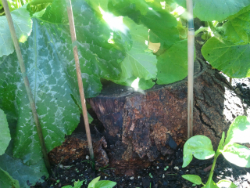

I had seen some minor success with growing basil in a pot so I decided to dream big and got myself some veggie seeds and unsoiled soil. I dug up any rocks or thin roots around the base of the stump and planted around it. Within a few weeks my butternut squash, zucchini, jalapenos had sprouted and after a month or 2 the entire box was taken over by this jungle of green. The cats never came back but my little patch of forest had attracted lady bugs and mantises and yellow jackets, oh my! I realized I had created a rather nice habitat that came complete with its own food chain.

I thought back to when I was a little girl, before I discovered writing, when I aspired to be an ecologist. I loved studying the elements of life and seeing how they all fit together, predators, herbivores, autotrophs, and niches. I still remember much of the basics because it had fascinated me so much and still interests me today. As the rainforest episode of The Magic School Bus once taught me, each bit of organic matter were all pieces of the big picture.
Nerdiness
Being called a nerd isn’t much of an insult these days. For some it’s a badge of honor. I prefer the way Hank Green’s put it in one of his vlogbrothers videos, he said that the characterizing aspect of being a nerd was that one loved things. Wil Wheaton said something similar at a convention appearance, during which he also made mention of himself as “…the, sort of, the King of the Nerds…” Nerds love loving things, with a passion that, at times, consumes their daily life. And these “things” are not limited to the stereotypical subjects of nerddom. In this blog, I hope to cover my love for Video Games, Sci Fi, Movies, Science, and Literature, but I’ll also be touching on some of my other random interests; gardening, the Tudor dynasty, car maintenance, camping, and just anything I love to love that sets my mind and heart a-spark.
 Nerdy Pursuits